Understanding AI in an HR Context
AI includes a range of technologies with varying implications for HR activities.
What types of AI are used in HR?
AI encompasses several approaches: machine learning, natural language processing (NLP), neural networks, and large language models (LLMs). It is a branch of computer science designed to enable machines to perform tasks typically requiring human intelligence.
Machine Learning
At the core of AI, machine learning enables systems to improve performance over time based on data, without being explicitly programmed for each task.
Natural Language Processing (NLP)
A key application in HR, NLP enables machines to understand and analyze human language—making it possible to process written or spoken communication across the organization.
Large Language Models (LLMs)
LLMs predict and generate text based on massive datasets. Tools like ChatGPT (a GPT model developed by OpenAI) can generate complex responses and support tasks such as writing job descriptions or performance reviews.
These technologies are reshaping how organizations manage talent, recruit, and develop employees.

Which HR Activities Benefit Most from AI?
Four main categories are being transformed:
- Behavior analysis: employee engagement, retention, sentiment analysis (NLP, neural networks)
- Event prediction: attrition risk, psychosocial risks (predictive models)
- Service personalization: tailored career paths and learning journeys (LLMs)
- Content generation: job descriptions, training materials, reports (Generative AI)
What was experimental two years ago is now scaling rapidly.

AI Benefits Across HR Stakeholders
AI adoption depends heavily on user experience. Neobrain enhances daily HR operations for all stakeholders:
- Employees: personalized career paths, internal opportunities, learning recommendations
- Managers: more tailored interactions based on employee preferences (Active Learning)
- HR teams: automated taxonomies, centralized data for better decision-making
AI for Employee Experience
Employees expect two things:
- Simple access to information
- Relevant, personalized recommendations
AI-driven personalization also drives adoption: 88% of users log into the platform at least three times per month.
Improved Employee Experience
Employees should not have to input the same data multiple times. Neobrain connects existing HR systems and centralizes data across modules (performance reviews, goals, skills, career aspirations), making the experience seamless.
AI Use Cases in HR
Connecting talents, aspirations, and opportunities
Traditional career paths are no longer effective. Combining skills and interests creates more engaging and flexible career journeys.
Key outcomes of Neobrain’s matching engine:
- Alignment between talent and business needs
- Better resource allocation
- Increased retention through consideration of employee preferences
- Enhanced mobility and development

Supporting Decision-Making
HR teams face constant questions from managers. When data is involved, AI simplifies access and interpretation—especially through integrations with partners like Microsoft.
Focus: AI and Skills Management
Uncovering Hidden Skills
- 80% of companies struggle to find the talent they need (Manpower, 2023)
- 60% of employees believe their company underutilizes their skills (WEF)
AI helps identify unlisted skills and unlock untapped potential.
Neobrain’s semantic engine detects and structures all usable skills—going beyond self-declared data to reveal implicit capabilities.
Accelerating Skills Framework Creation
Two key capabilities:
- Automated framework generation
- Consistency checks
Result: frameworks built 4x faster on average.
Neobrain analyzes:
- 72,000 skills
- 26,000 jobs daily
This enables faster, more reliable skills architectures aligned with market trends.
Our customer team uses AI to work with you to build a software solution tailored to your culture, processes, and ethical considerations.
AI and Job Transformation
To assess AI’s impact, focus on tasks, not job titles.
Key evaluation criteria:
- Physical component
- Human interaction required
- Level of expertise
- Data intensity
- Regulatory constraints
- Risk level
- Creativity/strategy requirements
- Task complexity

AI Adoption: Where Do Companies Stand?
Despite widespread individual use, enterprise adoption lags:
- ~35% of employees use AI daily
- Only ~10% of companies have assessed its business impact
AI Maturity Levels
- Individual productivity
Personal AI tools improve daily efficiency - Process optimization
Automation (RPA, CRM, logistics) improves operations - Customer-facing AI
AI embedded in products (e.g., personalization engines)
Ethics and AI
AI introduces risks, especially bias.
Examples:
- Facial recognition bias (Gender Shades project)
- Amazon’s biased recruitment algorithm (2014)
Best practices:
- Use diverse, representative datasets
- Involve multidisciplinary teams
- Conduct regular audits
Data Sovereignty
Using external AI tools can expose sensitive data.
Risks include:
- Loss of control
- Compliance issues
- IP concerns
Some companies (e.g., Veolia, AXA) use secure, private AI environments (e.g., Azure OpenAI).
Data anonymization is essential.
Regulation: The EU AI Act
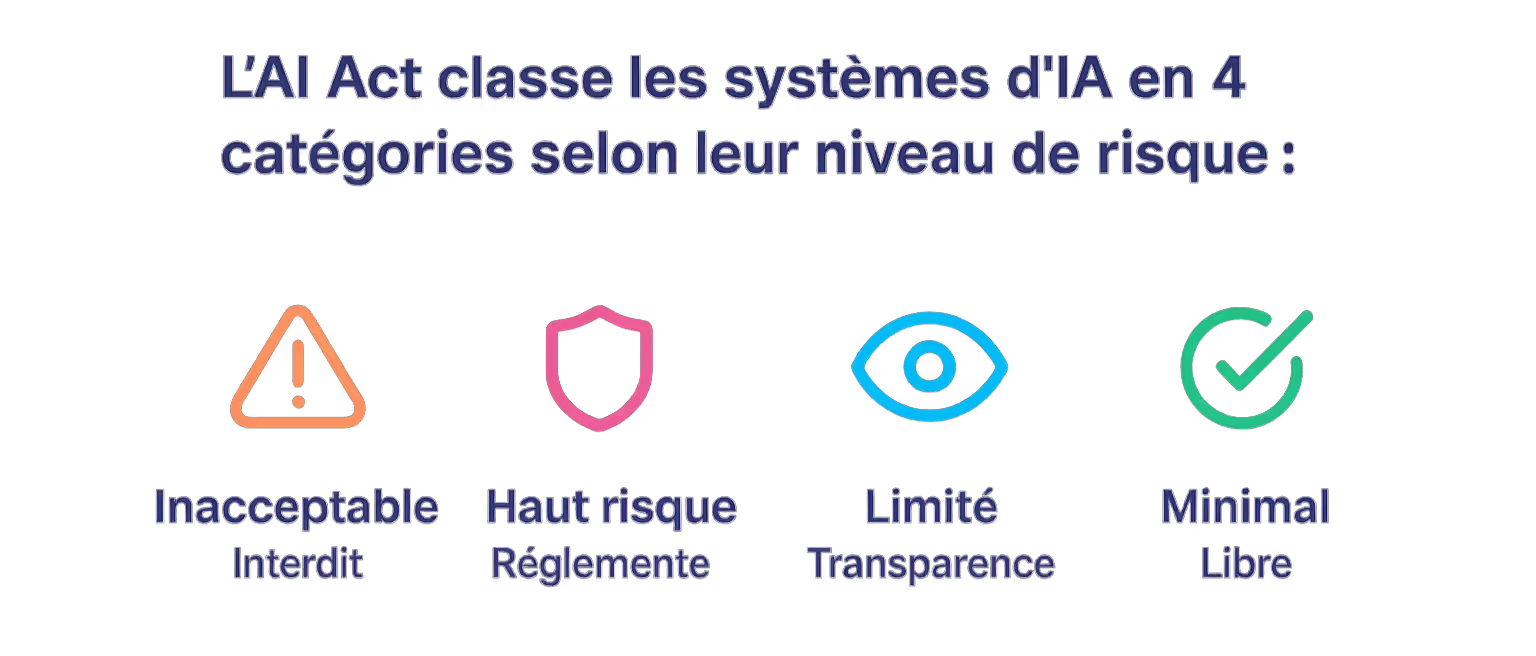
The AI Act classifies AI systems by risk level:
- Unacceptable
- High
- Limited
- Minimal
HR use cases often fall into higher-risk categories, requiring:
- Human oversight
- Documentation
- Governance
Compliance requires coordination between HR and IT—and can become a competitive advantage.
Schlussfolgerung
Start with use cases, not tools.
Proven use cases include:
- Attrition risk detection: early warning signals from engagement, performance, satisfaction
- Succession planning: predictive success probabilities
- Workforce planning: anticipating future skills needs
- Skills frameworks: rapid creation using external and internal data
The Next Step: AI Agents
A new phase is emerging.
Where traditional AI analyzes and recommends, AI agents execute:
- Automate recurring processes
- Structure data automatically
- Operate directly within HR systems
They bring:
- Time savings
- Increased reliability
- Better user experience
This marks the shift from AI as a tool to AI as an operational teammate.